
The Voting News Daily: Nelson blasts Florida election-law fixes, Report shows that 1 in 6 recounts changed results
FL: Nelson blasts Florida Legislature’s 2012 election-law fixes – Legislature – MiamiHerald.com
Democratic U.S. Sen. Bill Nelson blasted state Republican lawmakers Monday for an election law overhaul that he says will block college students and military personnel from having their votes counted next year when he and President Barack Obama both seek re-election. Then Nelson waded into a controversy of his own when he suggested the U.S. special forces that killed al-Qaida leader Osama bin Laden could be blocked from voting if the Legislature passes the bill. “Should we deny those very military that carried out this very successful decapitating of the al-Qaida snake?” Nelson asked at a Capitol news conference. “Should we deny them because they have signed their voter registration card in a different way than they signed their absentee ballot overseas?” Full Article
Report: Recounts rarely impact state elections | California Watch
Between 2000 and 2009, recounts in state elections were extremely uncommon and rarely resulted in reversals when they did happen, according to a new study [PDF] by the Center for Voting and Democracy. Out of 2,884 statewide general elections there were 18 recounts, only three of which resulted in a change in decision. “There are people who have been pretty critical of the way that we do a lot of voting, thinking it could be done better. But at the same time the basic function of tallying ballots once the voter gets them to their poll worker or the machine, it seems to actually be doing well,” said Robert Richie, co-author of the study. … Having an automatic recount procedure for a race won by 0.5 percent, that’s way too high, absent some reason to think that there’s something that was systematically done in error or fraud.”
But Pamela Smith, president of Verified Voting, said the systems used in many states can’t be recounted because of their design. And even where recountable systems are used, fraud and error can easily go undetected if a race is not close enough to merit a recount. “You’ve got 18 recounts out of close to 3,000 contests, three of which resulted in decisions being reversed,” she said. “Well, three isn’t a large percentage out of 3,000, but it’s a sixth of 18. If those are the only cases that you’re doing a recount in, I think you have to look at that.” Californians have been nothing if not skeptical when it comes to using electronic machines and adopting methods like ranked-choice voting. But Smith said California is ahead of the curve when it comes to many of these issues. The state has been conducting a baseline manual tally of 1 percent of precincts in every county for decades. And in 2007, California Secretary of State Debra Bowen commissioned a “top-to-bottom review” of voting systems and created a Post Election Audit Standards Working Group [PDF]. California also recently passed legislation launching a “risk-limiting audit” program to increase the scrutiny of electronic voting machines, which is something that Richie calls for in the study.
 On Friday, day three of the statewide recount of the Supreme Court race, the Kloppenburg recall effort called in their attorney, Michael Maistelman, to monitor the recount in Waukesha County.
 The British government will spend 48.5 Billion Kwacha to help the Electoral Commission of Zambia (ECZ) deliver free and fair elections during this year’s polls.
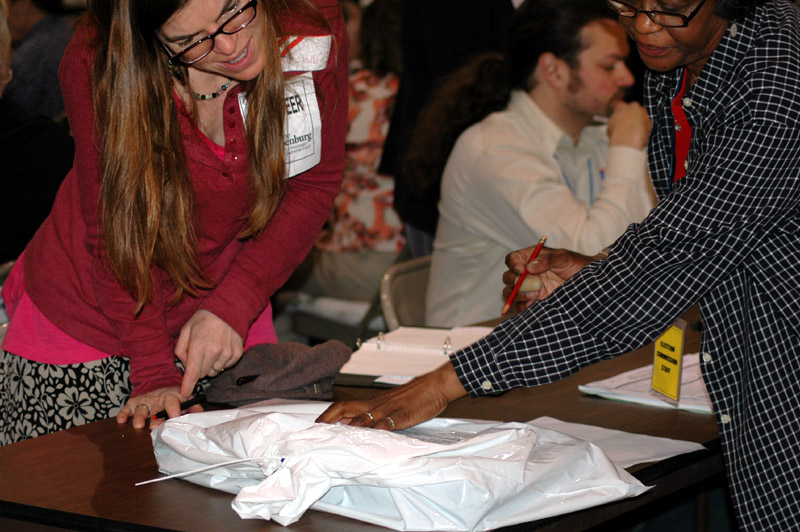 If you’re expecting to see images reminiscent of Florida 2000, you’re out of luck. The first day of the Wisconsin Supreme Count election recount began and ended quietly in Milwaukee County with no protesters, a few citizen observers and about 50 Kloppenburg and Prosser operatives.